.png?width=760&height=550&name=twojobs%20(2).png)
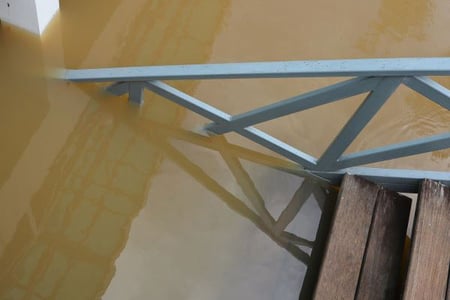
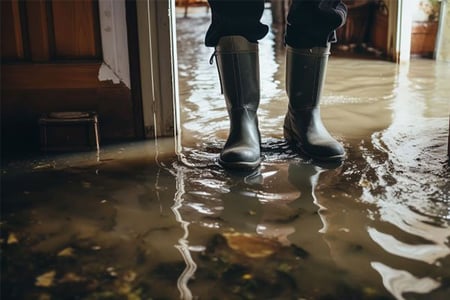
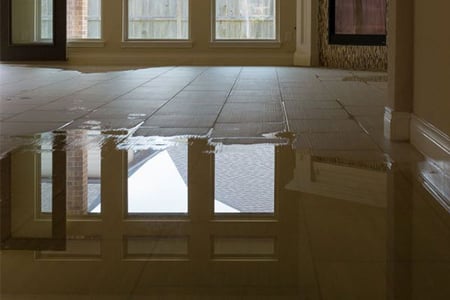
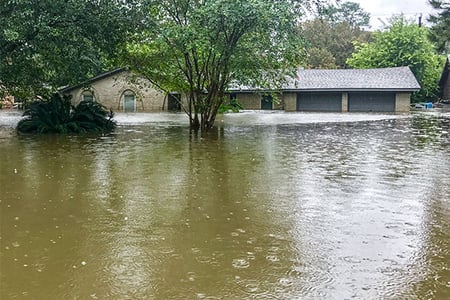
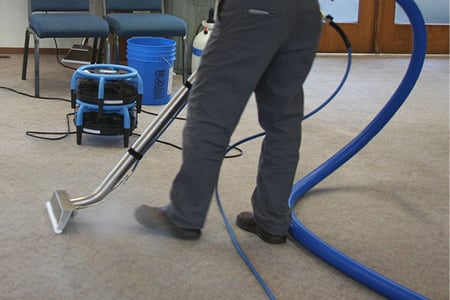
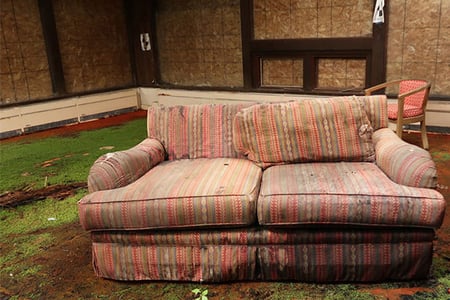
At Legend Brands’ Restoration Sciences Academy (RSA), students regularly put drying theory into practice in purpose-built training houses that are flooded for hands-on learning. There, they perform the work of a real drying project, from inspection and extraction to equipment setup, monitoring, and adjustment.
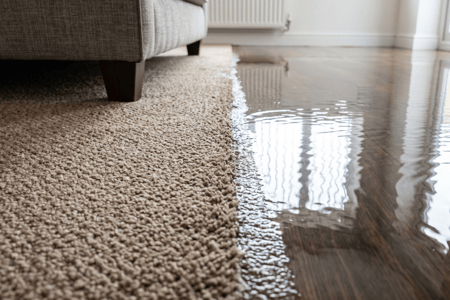
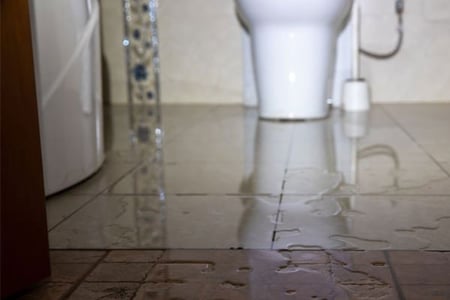
The houses may look similar – in layout, materials, and flooding impact – but the drying results are not always the same. In one class, students may perform thorough extraction and establish strong drying conditions, resulting in efficient drying progress. In another, weaker extraction may leave more water behind: the carpet may begin to feel dry, while the subfloor beneath it becomes wetter rather than drier.
Successful drying depends on much more than appearances. It depends on skilled inspection, accurate classification, effective extraction, appropriate use of equipment, and ongoing monitoring.
Looking Beyond Surface Similarities
While two losses may appear nearly identical, the conditions that influence drying performance are often hidden from view.
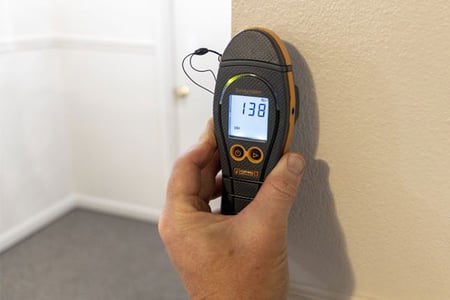
A skilled moisture investigation is one of the most important early steps in the drying process. It helps determine what is wet, how deeply moisture has been absorbed, and whether the affected materials can be dried in place. This requires professional tools, as well as the experience to interpret the data:
- How far has moisture migrated?
- Is moisture present only at the surface, or is it deeper?
- How are walls and ceilings affected?
- Are structural materials minimally absorbed or deeply absorbed with water?
- Are materials dryable, or will they lose integrity after water exposure?
A job with limited moisture intrusion in readily dryable materials may progress very differently from a job where moisture has penetrated wood, plaster, concrete, masonry, or multilayer assemblies.
Restorability Can Change the Drying Plan
Not all affected materials are equally restorable. Before a drying plan can be developed, both the nature of the water loss and the materials must be evaluated:
- Water category and contamination are critical. A clean water loss may allow certain materials to be dried in place, while a contaminated water loss may entail demolition of finishing layers – along with structural cleaning and decontamination – before structural drying can proceed. Before deciding how to dry a material, determine whether it should be dried at all.
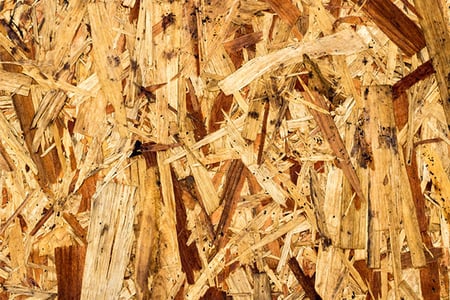
- Material quality also matters. Some materials can be dried successfully when properly evaluated and managed, including solid wood lumber, plywood, laminated beams, OSB, concrete, and masonry. Other materials, such as some MDF or particleboard products, tend to swell, weaken, or disintegrate after exposure to water and will need to be removed early in the process.
Two rooms may look similar – but one may contain materials that can be dried, while the other may contain materials that should be removed. That difference has a major impact on the scope of work performed, equipment usage, drying time, and documentation.
Materials and Assemblies Hold Moisture Differently
The age and history of a building can also change the drying strategy. Newer construction may involve relatively straightforward assemblies with fewer finishing layers, while older buildings may be much more complex. Flooring may have multiple layers, a wall may consist of drywall over plaster and lath, and a ceiling may have been modified repeatedly over decades.
These "archaeological dig" assemblies can trap moisture within multiple layers of flooring, certain wall finishes, cavities, subfloors, and other building materials, making the restoration process more complex than a visual inspection might suggest.
This is where class of loss becomes important. Under the ANSI/IICRC S500 Standard, water losses are classified by expected evaporation load and the depth of absorption into building materials. For example, Class 4 losses include deeply held or bound water in low-evaporation materials or assemblies, such as plaster, wood, concrete, masonry, multilayer wallboard, multilayer subfloors, gym floors, or other complex built-up assemblies.
The practical takeaway: deeply absorbed moisture calls for a different approach than surface moisture. Longer drying times, more aggressive drying conditions, specialty drying methods, or targeted equipment application may be necessary.
Classification Affects Equipment Decisions
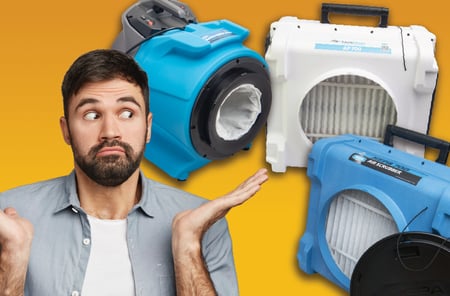
Effective equipment selection requires more than calculating square footage. It must also account for the class of loss, material types, evaporation load, temperature, humidity, and airflow conditions.
One consequence of overlooking these factors is misclassification. If a project is treated as a lower class of loss when conditions support a Class 4 classification, the drying system may not provide sufficient dehumidification for aggressive drying.
The goal is to create and maintain effective drying conditions between the air and the wet materials. Depending on the job, that may include:
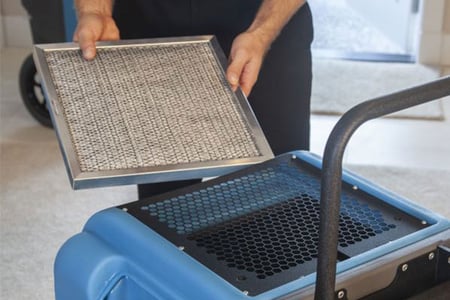
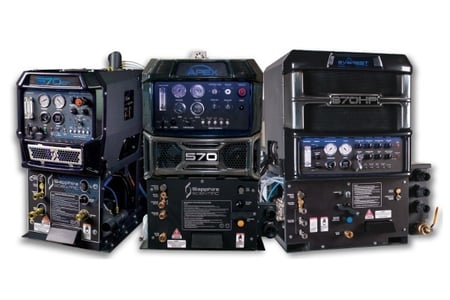
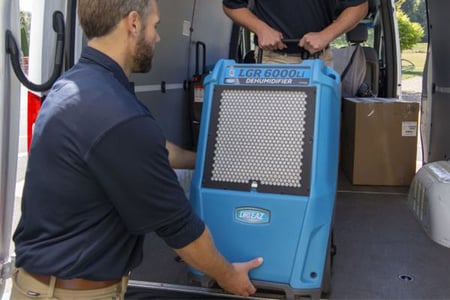
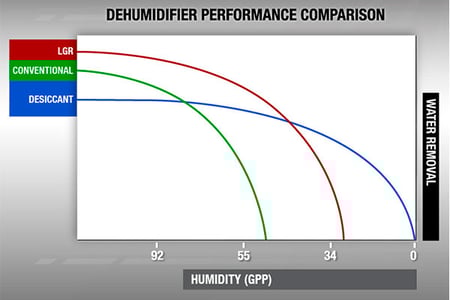
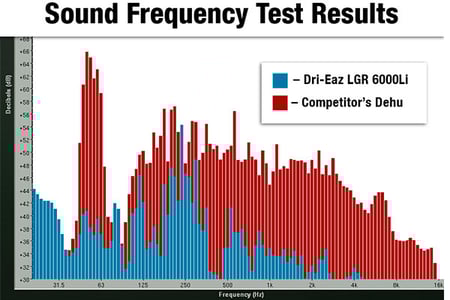
- High-performing LGR or desiccant dehumidification
- Properly calculated starting dehumidification
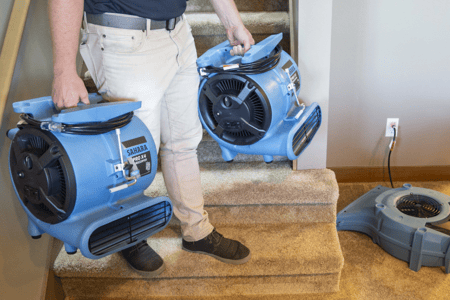
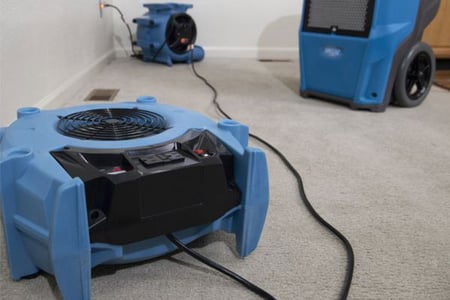
- Correct airmover placement and speed
- Specialty drying equipment for wood floors or multilayer assemblies
- Targeted drying methods such as tenting, chambering, or injection drying
The right equipment strategy is not simply “more equipment.” It is the right equipment, placed and adjusted correctly, for the materials and conditions present.
Extraction and Airflow Can Change the Outcome
Extraction and airflow can significantly influence drying performance. A few key considerations:
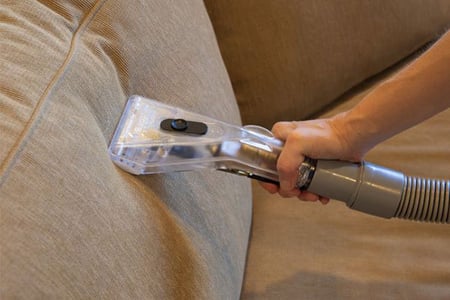
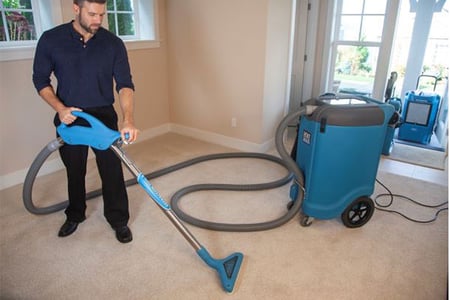
- Extraction matters. When water is not effectively removed at the start, excess liquid water remains in the materials, increasing the amount that must be removed via evaporation and dehumidification. This scenario, at best, results in slow drying.
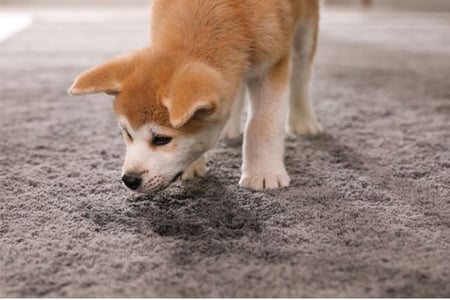
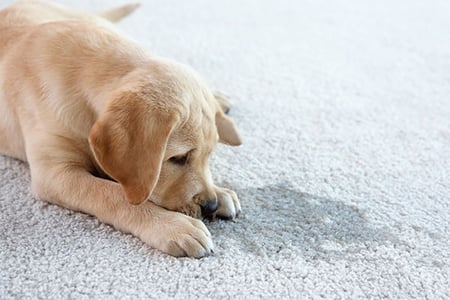
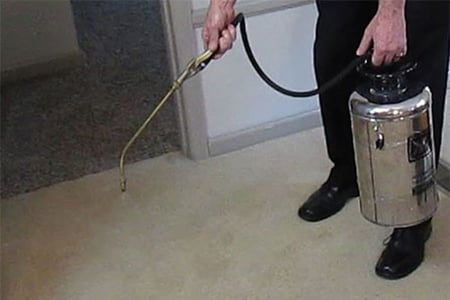
- Surface dryness can be misleading. In carpet-and-pad situations, the carpet may feel dry after a brief period of drying while excess unextracted water remains below – to the point of a subfloor becoming wetter as moisture is forced into it from a less than fully extracted pad lying on its surface.
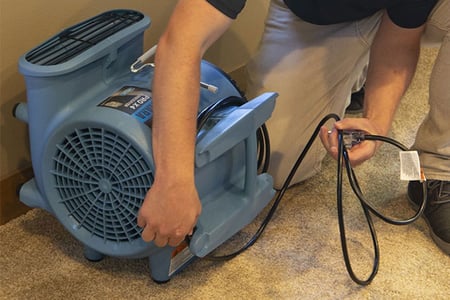
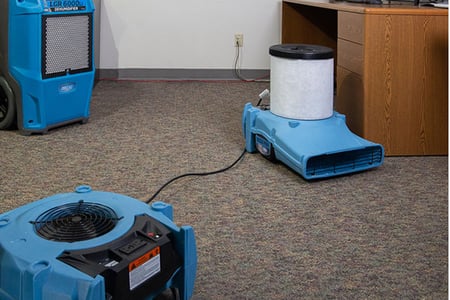
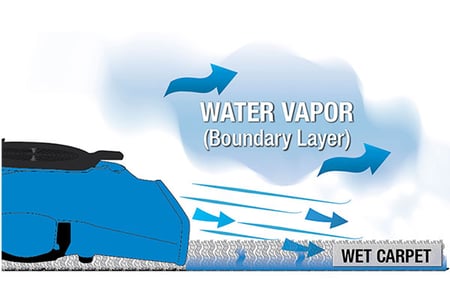
- Airflow must be intentional. Airmovers should be positioned to move air across all wet surfaces and to support high evaporation. Placement, angle, speed, high velocity, and surface coverage all influence drying performance. Areas that do not get adequate airflow will dry more slowly, even when the drying chamber provides adequate dehumidification.
For the most effective drying, closely evaluate how materials respond and adjust the drying system as conditions change.
Ongoing Monitoring Reveals What Is Really Happening
Documentation is often discussed in terms of payment, compliance, and communication – all important – but tracking this data is also one of the most critical tools for decision-making on the job.
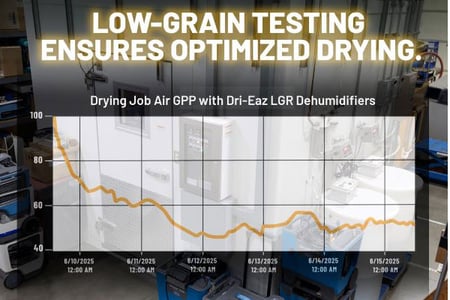
Daily psychrometric readings and material moisture measurements help determine whether the drying system is working – whether conditions are improving, if materials are releasing moisture, and whether adjustments are needed. Monitoring data helps evaluate drying progress, refine equipment placement, and determine when drying goals have been achieved.
Keep in mind that relying entirely on shallow moisture measurements from meters can create a false sense of completion. The surfaces may test dry after a few days while deeper moisture remains. However, if the drying system is removed too early, abnormal moisture may remain within materials and assemblies, creating the potential for secondary damage.
Skilled monitoring, including measuring moisture at appropriate depths within materials and assemblies, helps prevent that.
The Key Difference Is Skill
Two drying jobs may look the same at the beginning, with similar rooms, similar materials, and similar visible damage. But once a skilled technician investigates the loss, classifies it, selects and places equipment, monitors progress, and adjusts the drying system based on the data, the differences become clear.
The lesson from RSA’s flood houses applies equally in the field: successful drying depends not on appearances, but on understanding and responding to existing conditions.
For restoration professionals seeking to strengthen those skills, RSA offers hands-on training that connects classroom knowledge with real-world drying decisions.


%20(1).png?width=450&name=Rogue_Blog_Post_Image%20(600%20x%20400%20px)%20(1).png)
.png?width=450&name=twojobs%20(2).png)
.png?width=450&name=Untitled%20(34).png)














.jpg?width=450&name=email_387159171-(2).jpg)



.jpg?width=450&name=werner_microscrope-(2).jpg)
.jpg?width=450&name=custcommentcard_210417437-(2).jpg)


.jpg?width=450&name=winespill-(2).jpg)
.jpg?width=450&name=uptool_stairs2-(2).jpg)
.jpg?width=450&name=inkexit_extract1-(2).jpg)





.jpg?width=450&name=reminder_postcard_postimage-blog-(2).jpg)






.jpg?width=450&name=cigarette-smoke_1222816192-(2).jpg)
.png?width=450&name=LB.Com%20Blog%20Image%20Template-1%20(1).png)