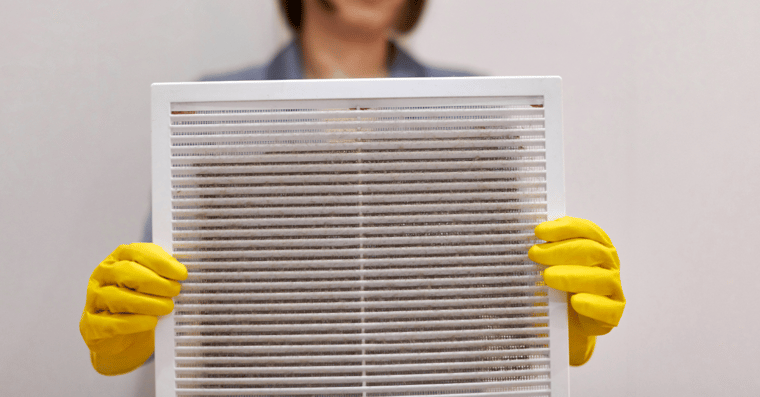
Moisture in materials, along with humidity, airflow, and temperature, all require active management throughout a restoration job. Airborne particles require the same level of attention.
Dust, smoke, and other particulates may already be present when technicians arrive. Restoration activities including moving or handling contents, demolition, cleaning, specialty drying procedures, and the use of high-velocity air movement, can introduce or redistribute additional particles into the air.
Air filtration isn’t just a remediation tool. When used appropriately, it can be part of a broader approach to controlling airborne particulate throughout a restoration project.
Effective air filtration starts with understanding what may already be in the air, what the work itself may put into the air, and what the system needs to accomplish.
START WITH CLEANING AND SOURCE CONTROL
One of the biggest mistakes technicians can make is assuming a HEPA air scrubber will do all the cleaning for them – but it won’t.
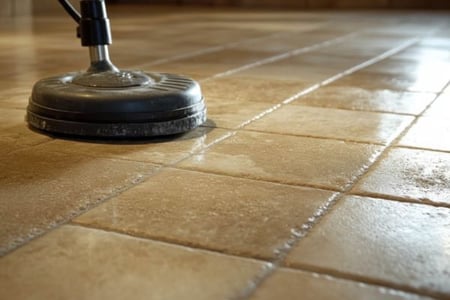
Before establishing aggressive airflow for drying, evaluate every restoration project for contamination and accumulated soils. Even when no recognized contaminant is present, thorough housekeeping-style cleaning may be needed to remove dust, debris, and other soils from flooring, as well as other horizontal and vertical surfaces.
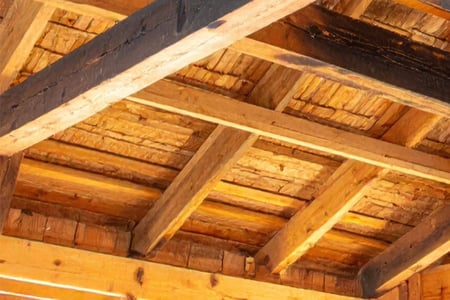
Surfaces that appear clean can also hold fine particulate. Walls, ceilings, exposed brick, and other surfaces may have fine soils that are not readily visible. When those surfaces are exposed to airflow, some of that particulate can lift into the air and remain in circulation.
In addition to existing soils, the work itself can generate airborne particulate. Demolition on a restoration project should be approached as controlled demolition. The goal is not simply to remove damaged material, but to limit the amount of particulate generated and prevent it from spreading through the project area or into adjacent spaces.
Depending on the work, particulate-control measures may include:
-
Temporary barriers and containments
-
Local dust collection at cutting or demolition tools
-
HEPA vacuuming
-
Damp wiping or other appropriate cleaning methods
-
Negative pressurization
-
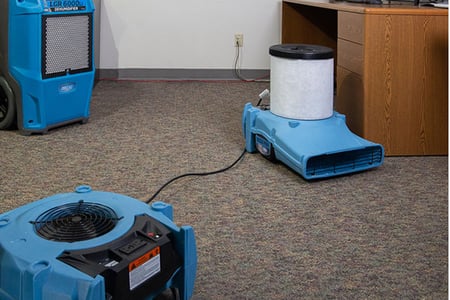
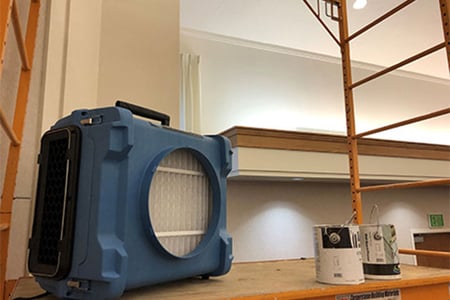
Portable HEPA air filtration
This is consistent with National Institute for Occupational Safety and Health (NIOSH) guidance for construction and renovation work. NIOSH recommends anticipating activities that may generate airborne contaminants, controlling hazards at the source, isolating work areas where appropriate, using HEPA filtration, and maintaining effective housekeeping practices.
On occupied projects, communication matters: let building occupants know what work is being performed and what measures are being used to control dust and other airborne contaminants.
HEPA filtration is one part of a total particulate-control strategy. It is not a substitute for source removal and thorough surface cleaning.
Expert Tip: An air scrubber can only filter the nearby air that passes through it. Don’t assume particles will drift toward the machine on their own – placement and airflow matter as much as the equipment itself.
KNOW WHAT’S IN THE AIR
Not everything in the air can be addressed by the same type of filtration.
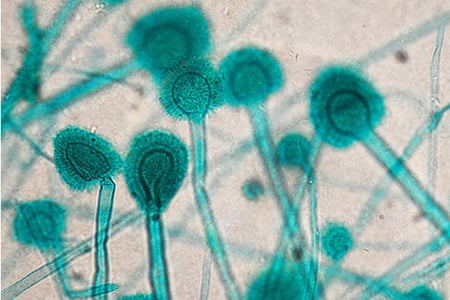
HEPA filtration is designed to capture airborne particulate matter. On restoration projects, that particulate may include dust, fine debris, mold spores, soot, and smoke particles.
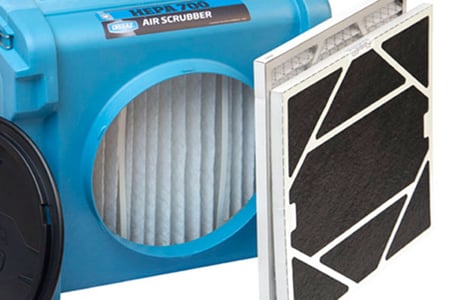
Prefilters capture larger particles before they reach the primary HEPA filter, helping extend HEPA filter life and maintain performance. However, even a properly operating HEPA system does not remove every type of undesirable airborne substance.
Gases, vapors, and odor molecules present a different challenge. Activated carbon can be added when certain gases and odors need to be controlled, while the HEPA filter continues to capture particulate matter. Instead of mechanically capturing particles, activated carbon removes certain molecules from the air through adsorption.
Identify whether the problem involves particles, gases, odors, or a combination of these before choosing the appropriate filtration approach.
MATCH FILTRATION TO THE JOB
Different restoration scenarios call for different air filtration approaches.
-
Water damage and structural drying
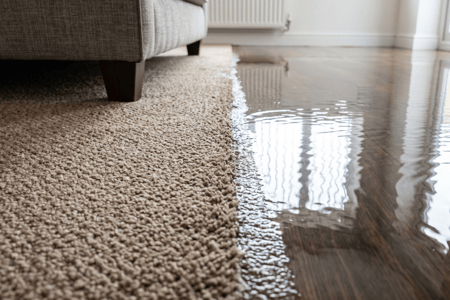
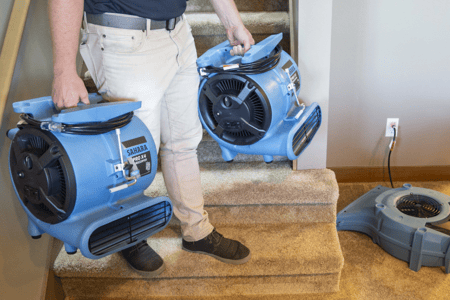
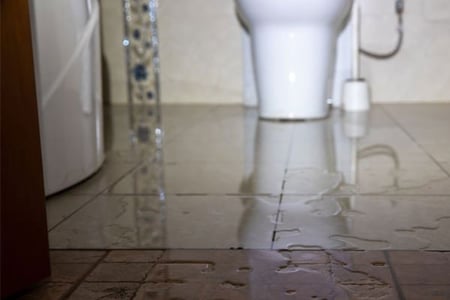
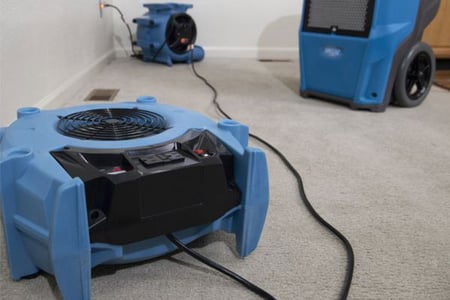
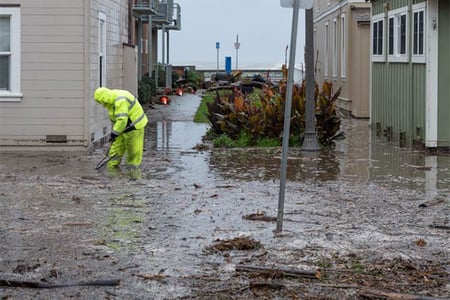
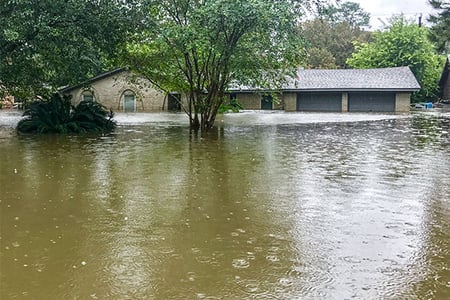
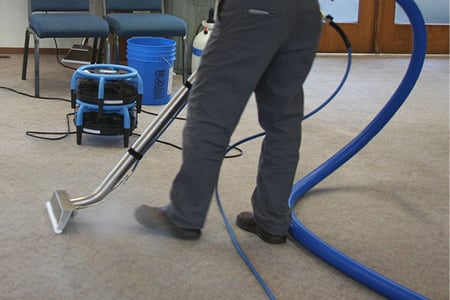
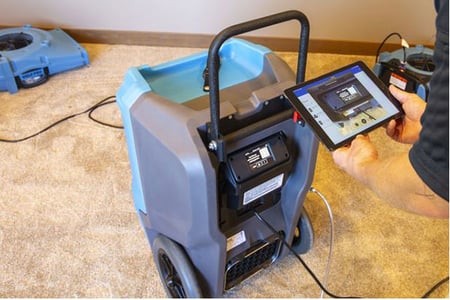
After water extraction, any necessary controlled demolition, and appropriate cleaning of affected surfaces, fine residual soils may remain elsewhere, including on surfaces, in crevices, or within materials. Under strong drying airflow, less visible particles on unaffected materials in the project area can become airborne. Air scrubbing can help continuously remove these particles from circulation as drying progresses.
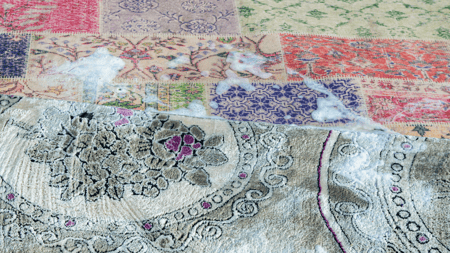
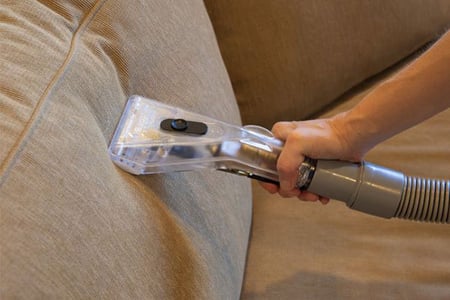
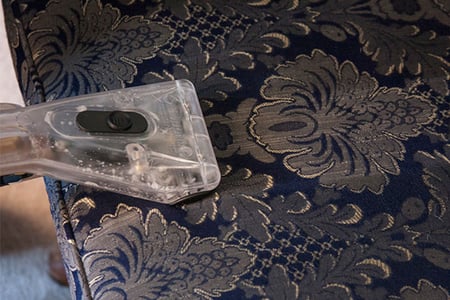
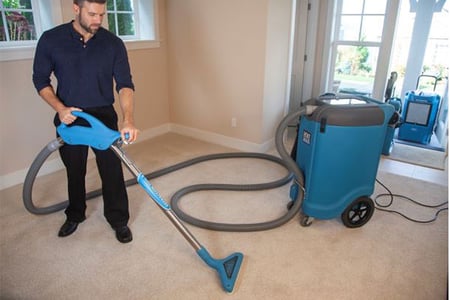
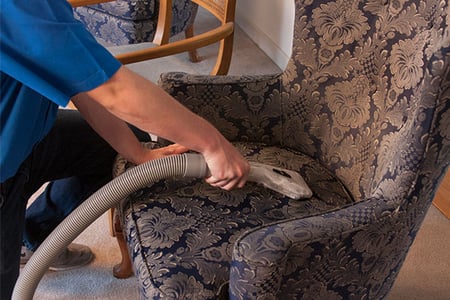
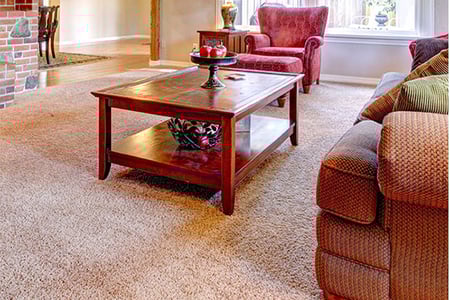
Soft textiles, (such as carpeting, and upholstery fabrics require additional attention because their large surface area can hold substantial amounts of fine soils. As these materials become dry, residual particulate can become more readily airborne.
- Demolition and renovation
Cutting, removing, and disturbing building materials can generate substantial airborne dust. Filtration is most effective when combined with other controls designed to reduce particle generation and migration.
Extra care is needed when restoration work is taking place next to clean or occupied areas. NIOSH recommends physical barriers, negative pressurization, HEPA filtration, and other controls to help isolate construction or renovation activities from adjacent occupied spaces. - Mold and contaminated losses
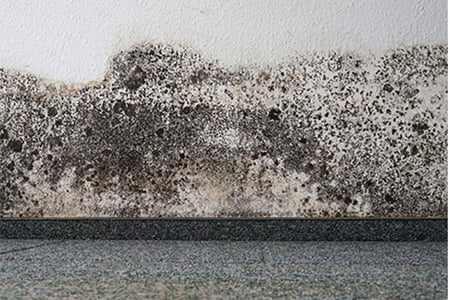
Known contamination requires greater attention to what becomes airborne and where it those particles may travel. HEPA filtration can play an important part of a broader remediation strategy that includes source removal, cleaning, containment, and pressure control. - Fire, smoke, and wildfire impacts
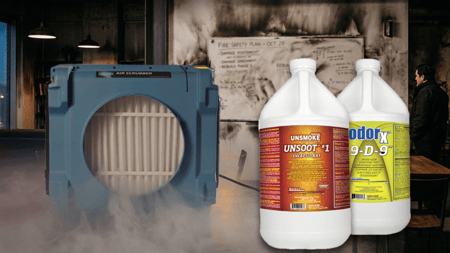
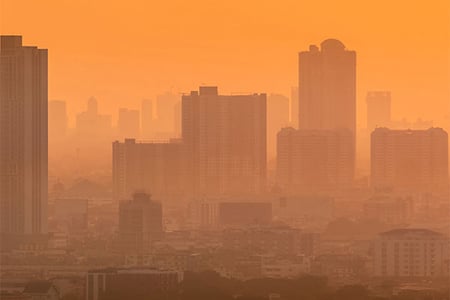
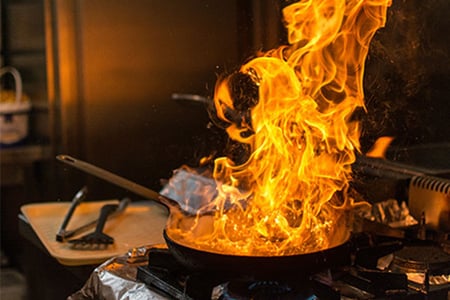
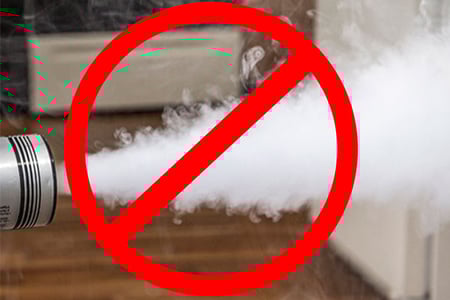
Smoke can contain both fine particulate and gaseous contaminants, making it a good example of why the filtration approach must match the contaminant. HEPA filtration can help reduce airborne soot and smoke particles, while activated carbon can address certain gases and smoke odors as surface cleaning and deodorization work proceeds.
Wildfire smoke can create similar indoor air quality challenges even when a structure has not experienced direct fire damage. Outdoor smoke can affect indoor air quality, and addressing both particulate and odor may require more than HEPA filtration alone.
AIR SCRUBBING OR NEGATIVE AIR? KNOW THE OBJECTIVE
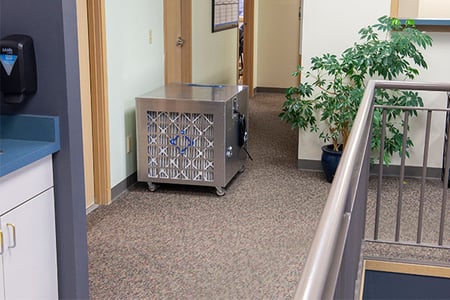
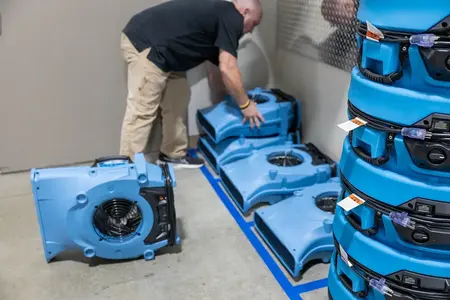
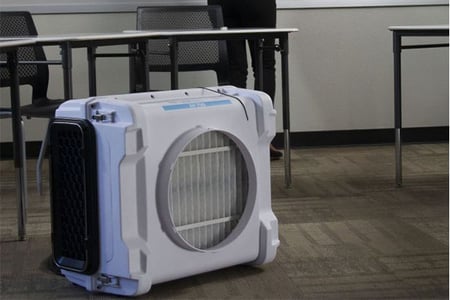
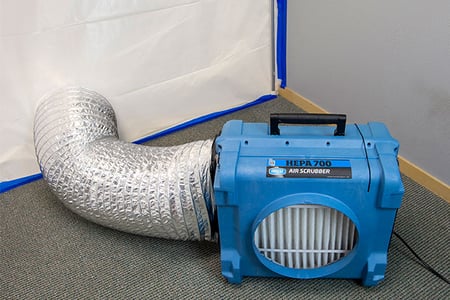
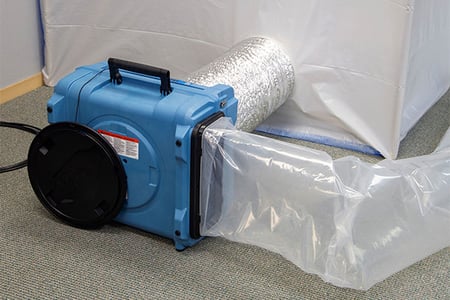
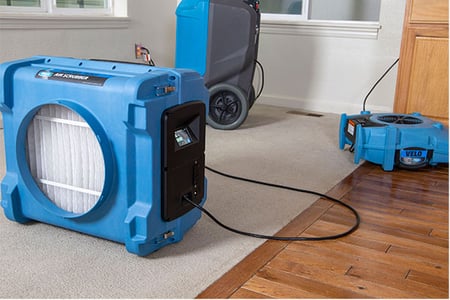
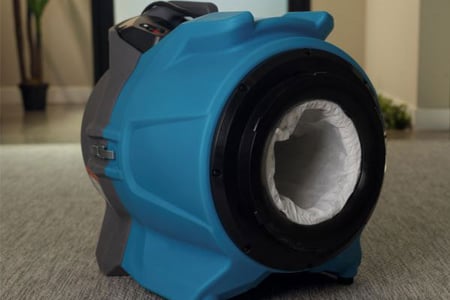
A portable HEPA air filtration device can perform different functions depending on how it is configured.
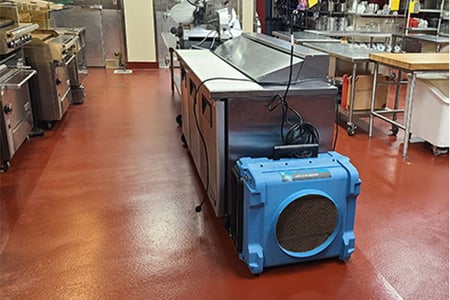
In air scrubbing mode, room air is drawn through the filtration system, and filtered air is returned to the space. The goal is to continually reduce airborne particulate within the environment.
A negative air application serves a different purpose. The HEPA-filtered unit is configured to exhaust filtered air from a contained work area, creating negative pressure relative to adjacent clean spaces. This helps limit the migration of airborne and settled particles, contaminants, odors, and gases into surrounding areas during the cleanup phase of the project.
During demolition, remediation, and other contamination-control work, negative pressure must be intentionally established and maintained. NIOSH guidance recommends monitoring pressurization to confirm that the isolation measures are working as intended. Simply putting a HEPA unit in the room is not enough.
Expert Tip: Before setting up an air filtration device, define the objective. Are you recirculating room air through HEPA filtration in air scrubber mode, or establishing negative pressure relative to adjacent spaces to help contain particles during demolition or cleaning work?
MANAGE FILTRATION THROUGHOUT THE PROJECT
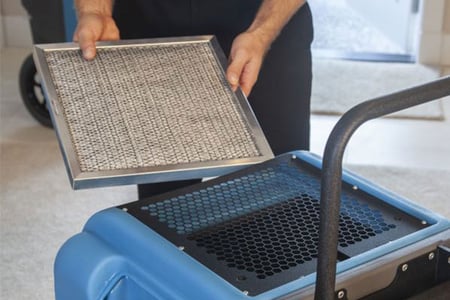
Technicians should inspect filters and replace them as conditions and manufacturer guidance require. If the work changes, reassess whether the filtration setup still serves the objective.
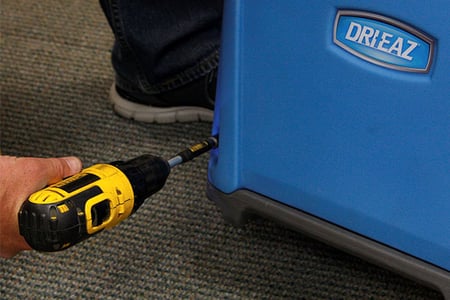
Basic setup and shutdown practices matter as well. Before operation, confirm that the filtration unit’s intake is open – a HEPA machine cannot filter particles it cannot draw in. At shutdown, reverse the sequence: fasten the inlet cap place before switching off the unit. Otherwise, particles collected on the prefilter media may become airborne again when airflow stops.
HEPA filtration works alongside cleaning, source removal, moisture control, containment, and other restoration procedures. It does not replace them.
Instead of asking only, “Do I need an air scrubber?” consider the broader restoration environment:
-
What is or could become airborne during this job?
-
What activities may introduce additional particulate into the air?
-
Where could those particles, odors, or gases travel?
-
What controls are appropriate for the work being performed?
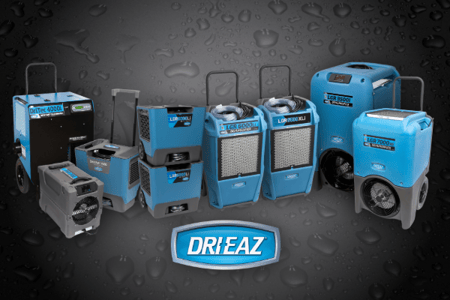
Once the filtration needs and objectives are clear, select equipment that matches the job. Explore Legend Brands air scrubbers for HEPA filtration options designed for restoration applications.

%20(1).png?width=450&name=Rogue_Blog_Post_Image%20(600%20x%20400%20px)%20(1).png)
.png?width=450&name=twojobs%20(2).png)
.png?width=450&name=Untitled%20(34).png)











.jpg?width=450&name=email_387159171-(2).jpg)


.jpg?width=450&name=werner_microscrope-(2).jpg)
.jpg?width=450&name=custcommentcard_210417437-(2).jpg)

.jpg?width=450&name=winespill-(2).jpg)

.jpg?width=450&name=uptool_stairs2-(2).jpg)
.jpg?width=450&name=inkexit_extract1-(2).jpg)



.jpg?width=450&name=reminder_postcard_postimage-blog-(2).jpg)






.jpg?width=450&name=cigarette-smoke_1222816192-(2).jpg)
.png?width=450&name=LB.Com%20Blog%20Image%20Template-1%20(1).png)