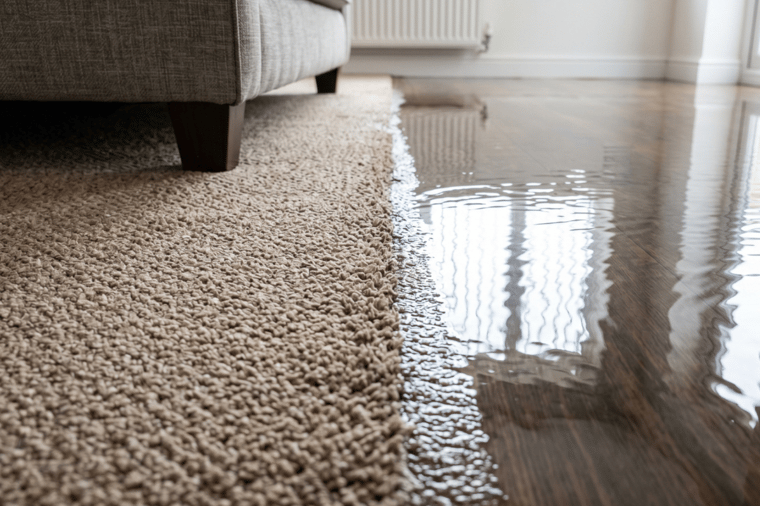
Ask three carpet cleaning technicians what makes carpet come clean, and you'll probably hear three different answers: hotter water, more pressure, or stronger vacuum. Each plays an important role, but none can deliver outstanding results on their own. Heat alone can't fix the wrong chemistry, higher pressure can’t remove dry soil that should have been vacuumed first, and a strong vacuum can't make up for skipped agitation or rushed dwell time.
TACT – time, agitation, chemistry, and temperature – is a familiar shorthand for soil suspension. But real-world cleaning performance depends on a longer chain of decisions: identifying the carpet and soil, removing dry particulates, suspending and rinsing soils, recovering moisture, grooming, and promoting rapid drying. Heat, pressure, and vacuum play critical roles during extraction, but extraction is only one link in the complete cleaning process chain.
1. Start With the Carpet and the Soil
Fiber type sets the boundaries for every cleaning decision, so before reaching for a pre-spray, know what you're cleaning and what needs to come out of it. Natural fibers like wool can be damaged by chemistry that are perfectly safe on most synthetics. The type and amount of soil are just as important. Light residential traffic, a heavily soiled commercial lobby, and grease-loaded restaurant carpet each require a different pre-spray, sometimes an enzyme-based one.
Expert Tip: The goal isn't to use the strongest chemical on the shelf – it’s identifying the right one for the job. Follow label directions, pretest the solution in an inconspicuous area, and confirm the solution matches the carpet fiber and the soil for the job.
2. Vacuum Before Wet-Cleaning
This is the step most often overlooked, and the one that can cost the most in both, resulting in wasted time and avoidable callbacks.
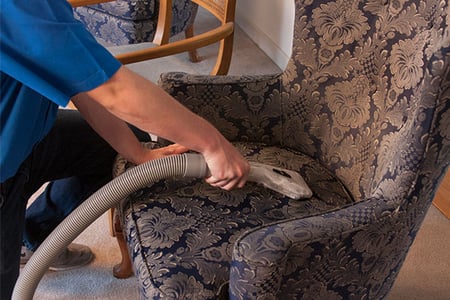
Thorough vacuuming removes a surprising share of soil before any cleaning solution ever gets mixed. In fact, 75-80% of carpet soil is dry particulate that cannot be rinsed away and must be removed mechanically. In high-traffic or heavily matted areas, using a counter rotating brush exposes embedded particles and improves the effectiveness of the vacuuming far more effective.
If this step is skipped, dry particulate can become suspended in moisture and turn into muddy residue that is much harder to recover. The remaining soil may then wick toward the surface as the carpet dries – which can lead to a negative experience for the customer and result in potential callbacks.
Watch for these signs that dry soil removal was skipped or rushed:
- Traffic lanes that feel stiff or gritty even immediately after cleaning
- Soil or spots that reappear along the same paths within days of cleaning
- Dark streaking or visible wicking as the carpet dries
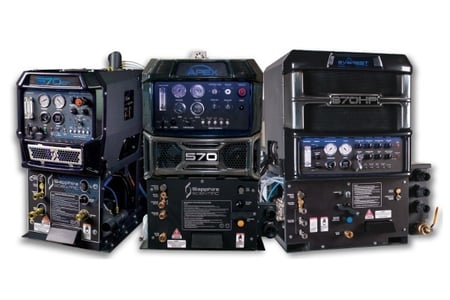
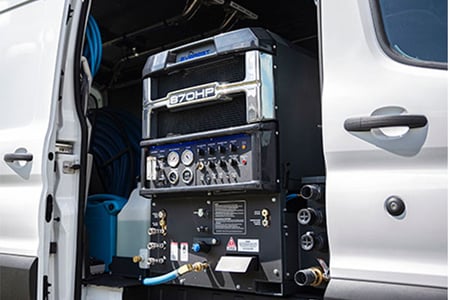
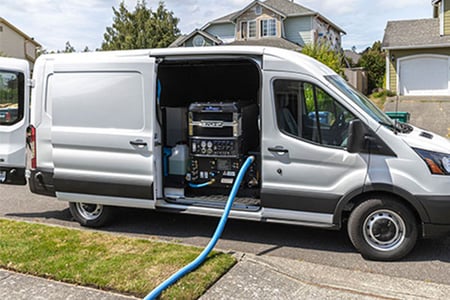
Expert Tip: A truckmount should never be used as a substitute for a proper dry vacuuming. It is built to recover liquid and suspended soil, not large amounts of dry particulate. Attempting to use it for dry soil recovery can place unnecessary strain on the vacuum blower.
3. Suspend the Soil: Pre-spray and Dwell Time
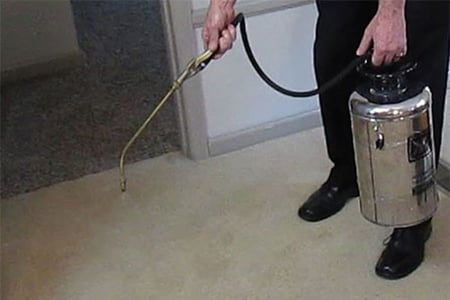
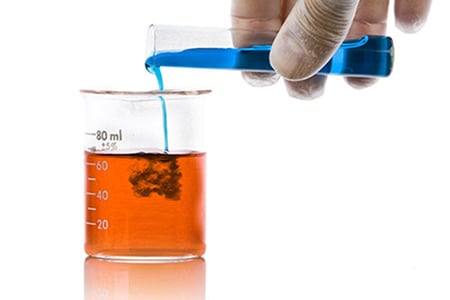
Pre-spray does the heavy lifting of loosening, dissolving, emulsifying, and suspending soil so it can be rinsed away later. Be sure to match the pre-spray to the fiber and soil load:
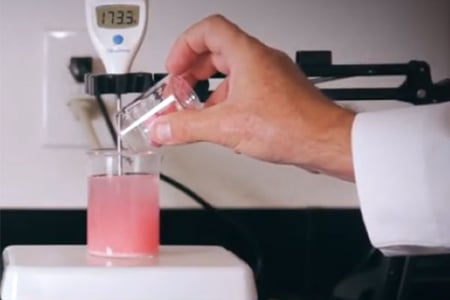
- Natural fibers – neutral to mildly acidic, roughly pH 4.5–8.5
- Light residential soil – around pH 9.5–10
- Commercial synthetic carpet – pH 11–11.5
- Heavy grease and food soil (restaurants) – an enzyme-based pre-spray
Apply evenly at the labeled dilution, and don't get ahead of the rinse. If pre-spray that dries before agitated can lose effectiveness. Working two rooms at a time is generally a good pace, though room size, humidity, and technician speed will impact that.
Once applied, allow the pre-spray chemistry time to work: roughly 10 to 15 minutes before hot water extraction so the chemistry has time to work. Follow the product directions and adjust dwell time based on job conditions.
Expert Tip: Dwell time doesn’t mean letting the pre-spray dry. If it starts drying before extraction, plan on reapplying.
4. Agitate for Better Contact
Agitation helps distribute pre-spray through more fiber surface and improves contact with the soil. That might mean using a manual carpet rake or a mechanical counter-rotating brush machine, matched to the soil load and construction. Light soil may require minimal agitation, while heavily soiled commercial traffic lanes benefit from more aggressive mechanical action.
Expert Tip: Think of carpet cleaning like washing a dirty car. Soap and water loosen soil, but it's the mitt or brush helps remove what is bonded to the surface. Carpet cleaning works the same way – chemistry, dwell time, and rinsing are most effective when proper agitation does its job first.
5. Choose the Right Rinse
Once soil is suspended, the rinse step pulls out the pre-spray, soil, and remaining residue. Match the rinse to the fiber, soil load, and pre-spray chemistry:
- Alkaline rinses (sometimes called detergents) bring extra cleaning power for heavy soil loads but leave detergent residue behind.
- Acidic rinses neutralize alkaline residue and help remove remaining minerals and detergents.
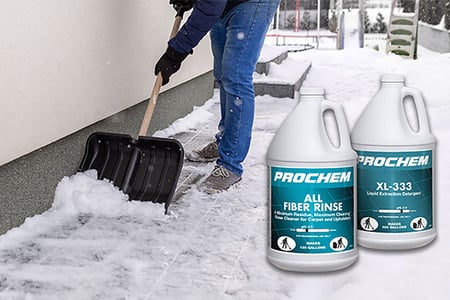
Plain water does not remove residue as effectively as a properly selected rinse agent. Products such asProchem® All Fiber Rinse are formulated for this purpose, helping remove residue while leaving fibers cleaner, and more balanced condition.
Expert Tip: Rinsing is more than just water in and water out. The right rinse chemistry helps neutralize residue reduce rapid resoiling, and complete the cleaning process – not just flush away what the pre-spray loosened.
6. Extract and Recover Moisture
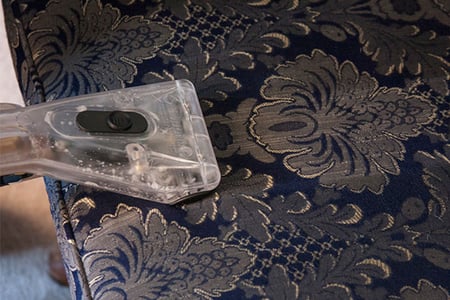
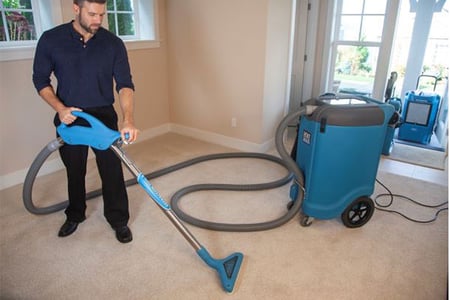
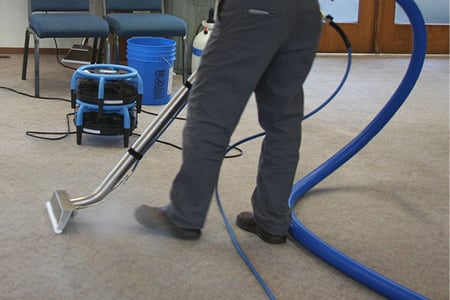
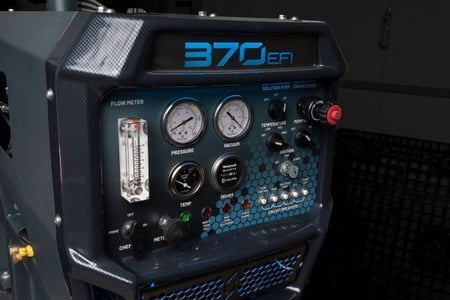
Extraction is where water flow, pressure, heat, rinse chemistry, tool design, and technique work together.
More pressure is not always excessive pressure can push moisture deeper into the carpet, increasing drying time without improving soil removal. Flow should be sufficient to flush suspended soil, while vacuum recovery removes the solution and soil from the carpet.
Alternating, overlapping wet and dry strokes help even out cleaning and prevent streaking. The dry strokes matter because they recover extra moisture without adding water.
During extraction, watch for:
- Over-wetting or foaming
- Overspray onto walls, furniture, or hard flooring
- Signs that soil may wick back as the carpet dries
Expert Tip: No single equipment specification tells the whole story. Results come from balanced heat, pressure, and vacuum and how effectively the carpet was prepared before the wand ever touched the carpet.
7. Groom, Then Dry the Carpet
A quick pass with a carpet rake or counter-rotating brush does more than remove wand marks – it separates and lifts fibers, increasing airflow and speeds evaporation. Loop-pile carpet generally does not require it, while cut-pile carpet usually benefits from it.
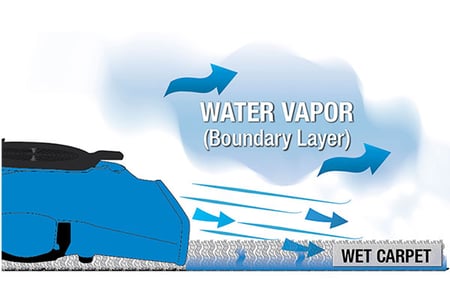
Drying is part of the cleaning process, not an afterthought that starts once the technician leaves. Solution volume, extraction efficiency, dry strokes, indoor temperature, humidity, and airflow all influence drying time.
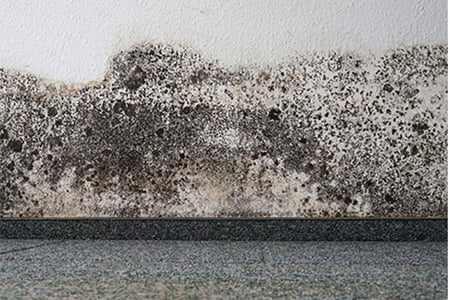
Slow drying can lead to odors, wicking, unhappy customers, and in the worst case, microbial growth. With the right water volume and airflow, today's carpet fibers should dry in roughly 3 to 6 hours, and drying should never stretch past 24 hours.
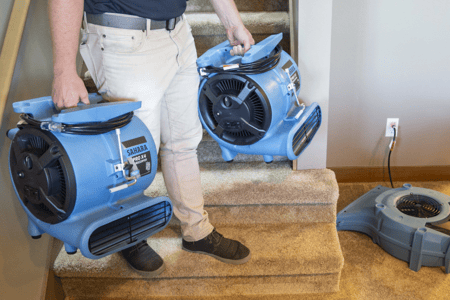
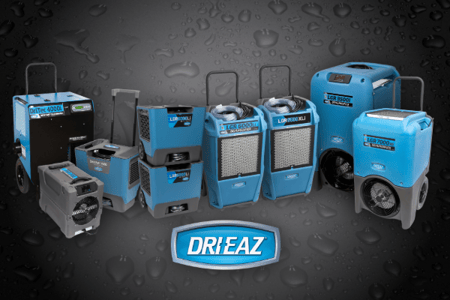
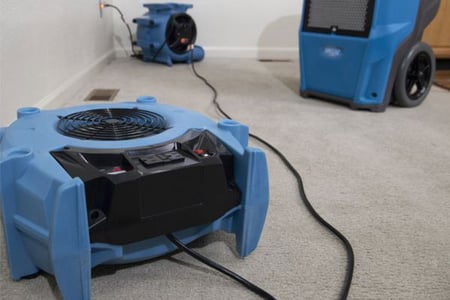
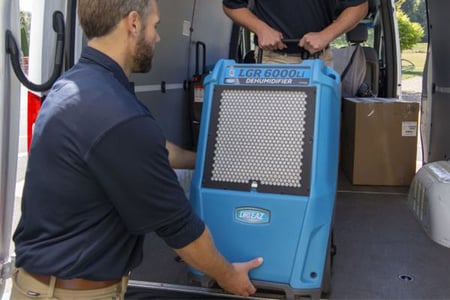
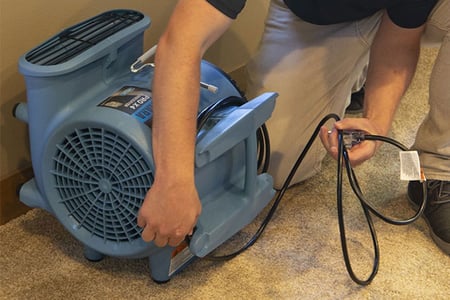
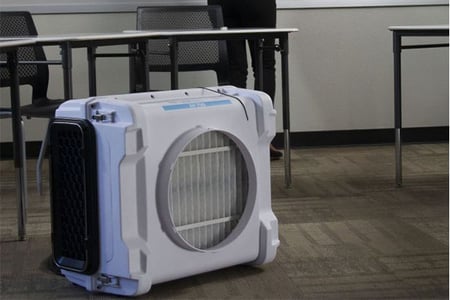
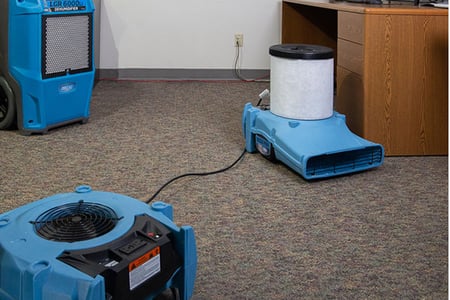
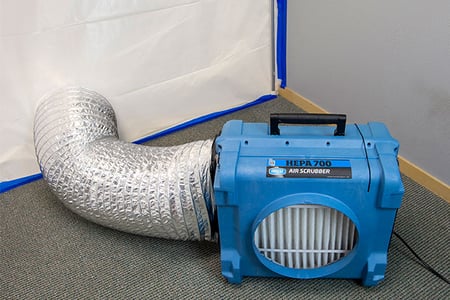
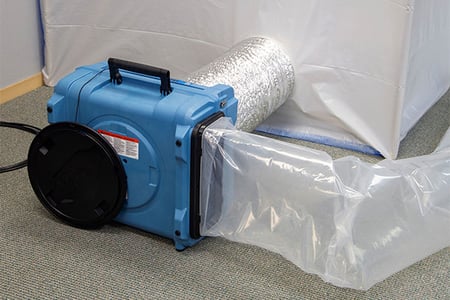
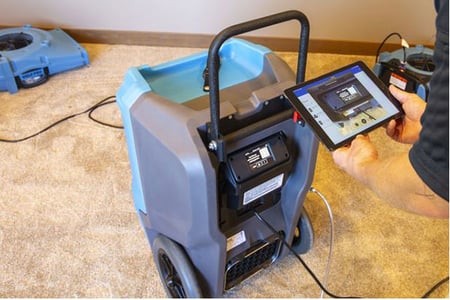
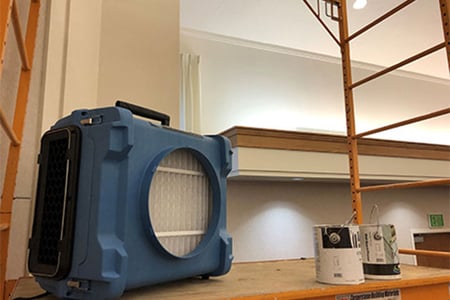
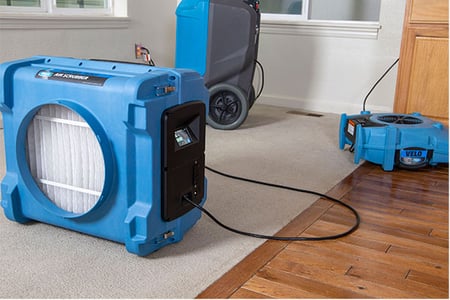
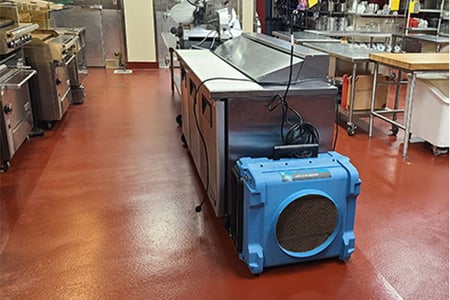
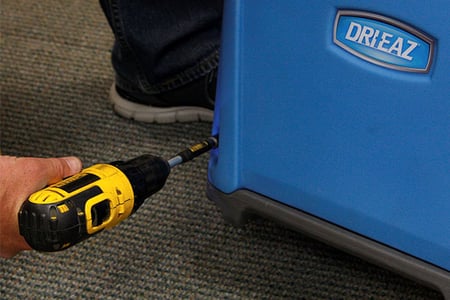
Expert Tip: Placing several high-performance air movers, like the Dri-Eaz® DriPod, helps ensure faster and more thorough drying.
Balance the Process for the Job
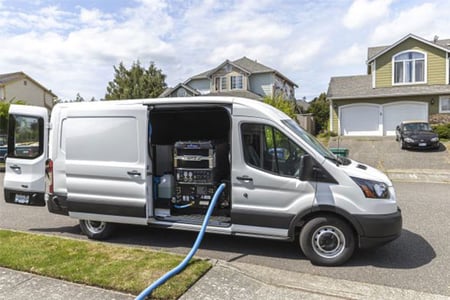
The sequence typically stays the same, but the decisions along the way approach changes with each job. A delicate wool carpet calls for gentler chemistry and controlled moisture. Lightly soiled residential carpets need a lighter touch, while greasy restaurant carpet with a history of wicking may need stronger suspension chemistry, agitation, and a heavier rinse. The same applies to portable-vs-truckmount debate - a portable can match truckmount results, but it typically takes longer. The main difference is productivity, not quality.
This isn't unique to carpet. Water, the right chemistry, agitation, and rinsing are part of nearly every cleaning task – a mitt on a dirty car or fingers working shampoo through your hair. Rinsing alone rarely completes the job, and carpet is no different.
Heat, pressure, and vacuum all play a part in cleaning performance, but none work alone. Technicians who get consistently strong results and fewer callbacks understand the purpose of each step and adjust their process to match the job.
For more hands-on training on cleaning chemistry and process, explore courses through Legend Brands' Restoration Sciences Academy.
.png?width=450&name=twojobs%20(2).png)
.png?width=450&name=Untitled%20(34).png)















.jpg?width=450&name=email_387159171-(2).jpg)



.jpg?width=450&name=werner_microscrope-(2).jpg)
.jpg?width=450&name=custcommentcard_210417437-(2).jpg)

.jpg?width=450&name=winespill-(2).jpg)

.jpg?width=450&name=uptool_stairs2-(2).jpg)

.jpg?width=450&name=inkexit_extract1-(2).jpg)





.jpg?width=450&name=reminder_postcard_postimage-blog-(2).jpg)






.jpg?width=450&name=cigarette-smoke_1222816192-(2).jpg)
.png?width=450&name=LB.Com%20Blog%20Image%20Template-1%20(1).png)